

Forgiveness Has a Scope, And a Boundary
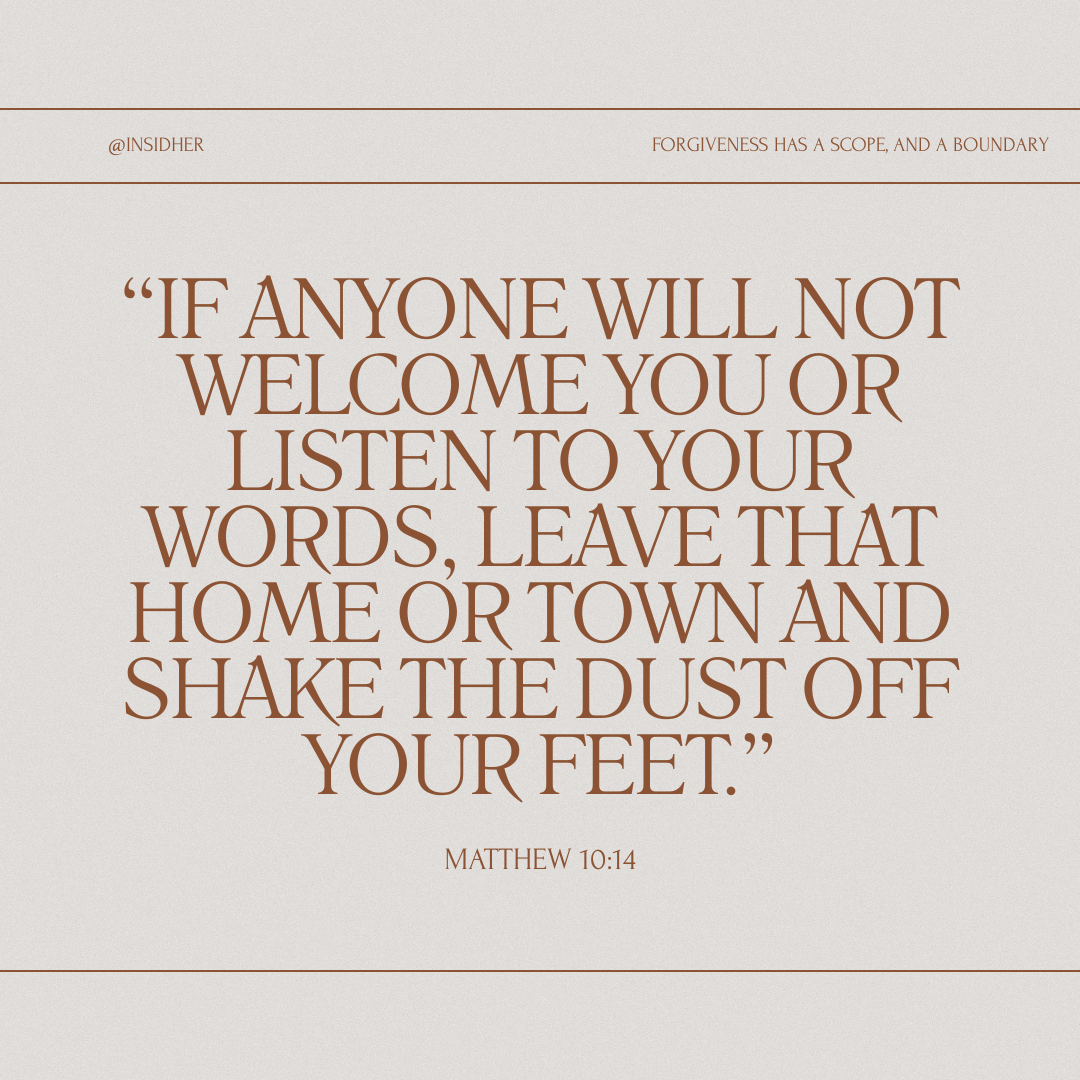
"If anyone will not welcome you or listen to your words, leave that home or town and shake the dust off your feet." — Matthew 10:14
"Children, obey your parents in the Lord, for this is right... Fathers, do not exasperate your children; instead, bring them up in the training and instruction of the Lord." — Ephesians 6:1, 4
I want to start this post with something that I wish someone had said to me a long time ago.
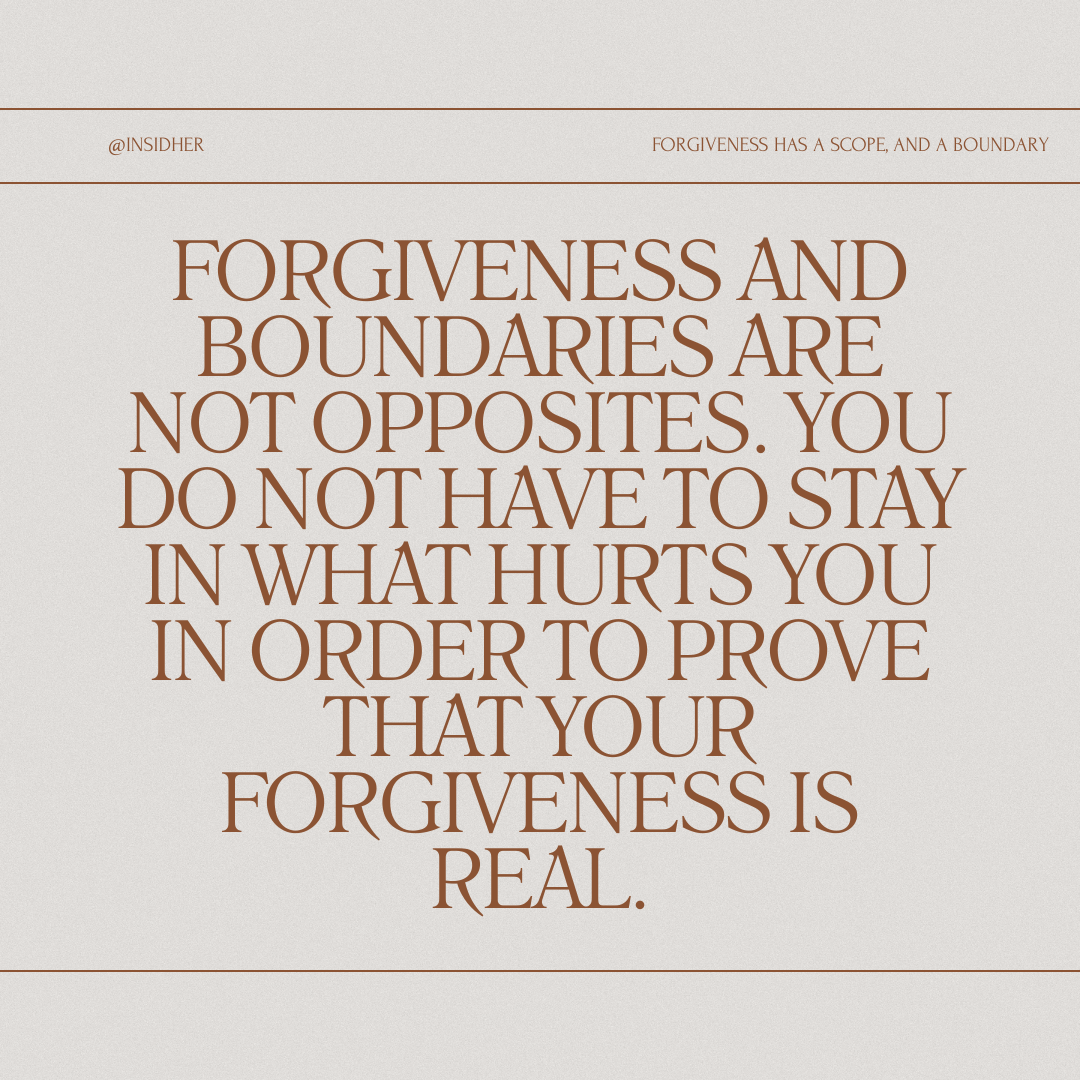
Forgiveness and boundaries are not opposites. They are not in conflict. You do not have to choose between forgiving someone and protecting yourself from them. You do not have to stay in what hurts you in order to prove that your forgiveness is real.
I know that might land differently depending on where you've been and what you've been told. So let's talk about it — honestly and carefully — because this might be the most important thing this entire series has to say.
What Religious Manipulation Taught Me — And What It Got Wrong
If you grew up in the church, or with deeply religious parents, there is a good chance you heard certain scriptures quoted to you so often that you know the reference before the words are even finished.
Children, obey your parents.
I heard that one more times than I can count. And I want to be clear — I am not dismissing that scripture. It is real and it is in God's Word and it matters.
But here is what I rarely heard alongside it:
Fathers, do not exasperate your children. (Ephesians 6:1-4)
That verse lives in the same passage. Same chapter. Same breath of instruction. One without the other is not the full picture and when we consistently quote one half of a passage while ignoring the other, we are not teaching Scripture. We are using Scripture. And there is a significant difference.
I call this religious manipulation, not always because the intent is malicious, but because the impact is. When a child is taught that obedience is required of them but accountability is not required of the adults in their lives, something deeply damaging happens. That child learns that their pain is less important than keeping the peace. That speaking up is disrespect. That enduring harm quietly is somehow Christlike.
It is not.
And when that same child grows into an adult and tries to name what happened to them — tries to say this hurt me, this was wrong, this caused damage — and is met with shame, deflection, and accusations of ingratitude, the wound doesn't just continue. It deepens.
I know this not as a concept. I know it as a lived experience.
When I would speak about the abuse I experienced, I was met with comments about being ungrateful, disrespectful, not being a good child. As an adult when I challenged harm, the response was often the same — shame, deflection, or a pivot to well you did this and that. Not a listening to the hurt. Just a scramble to confirm that they weren't the only wrong party.
That is how people who have been abused or harmed get silenced. And it happens in families, in friendships, and yes — in churches.
My mother went to our pastors about my father's abuse. The cheating. The physical violence. The financial control. The psychological harm. And she was told, “God hates divorce.” She was told to stay. Her faithfulness as a wife and mother was questioned rather than her safety being prioritized.
I want to say clearly and without apology, that was wrong. That was a misuse of God's Word. And if you have ever been told something similar, I want you to hear this:
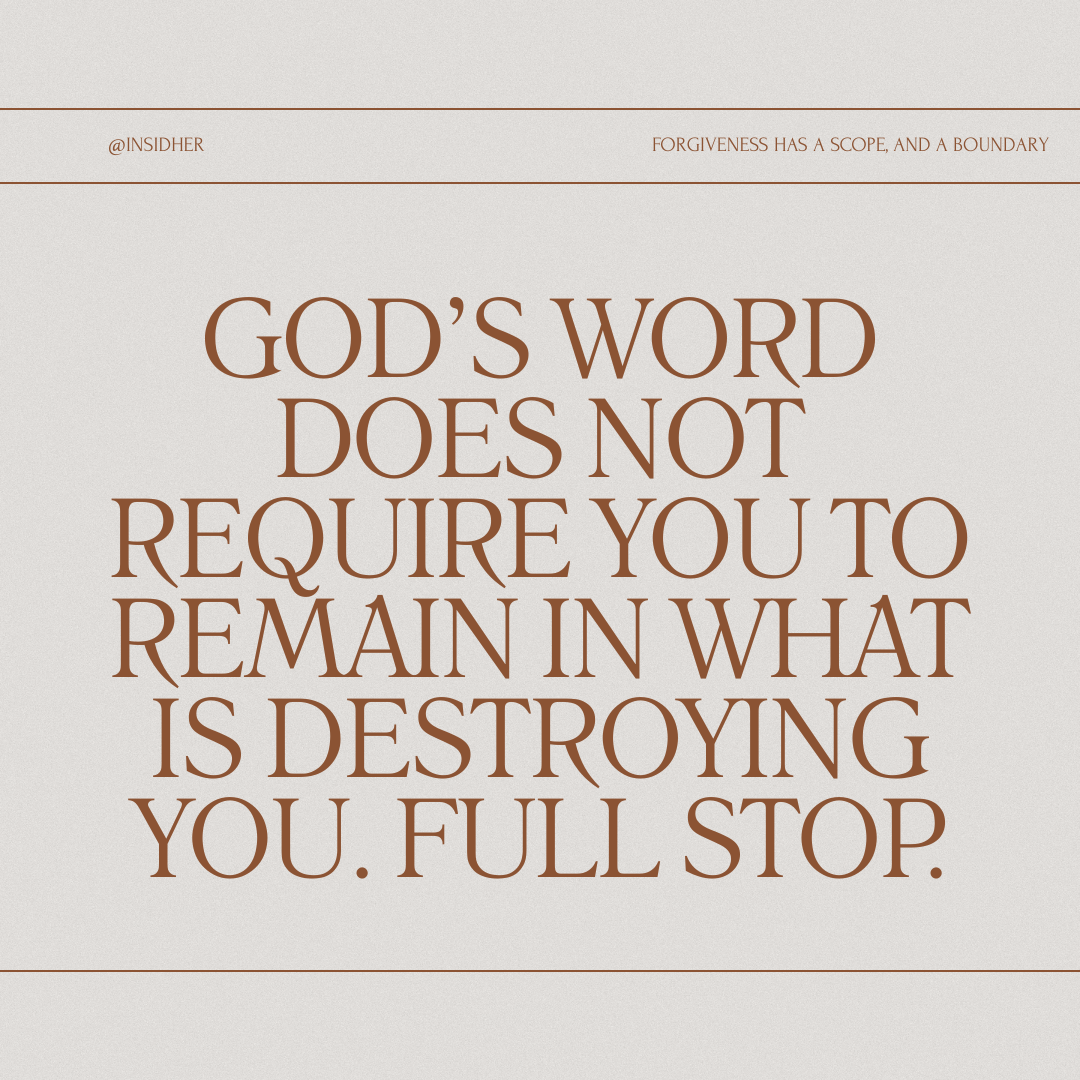
God's Word does not require you to remain in what is destroying you. Full stop.
What Jesus Actually Said About Leaving
Let's go back to Scripture — the full picture this time.
In Matthew 10, Jesus sends His disciples out and gives them instructions. And in those instructions He says something that doesn't get quoted nearly enough in conversations about forgiveness and relationships:
If anyone will not welcome you or listen to your words, leave that home or town and shake the dust off your feet.
Shake the dust off your feet. Don't linger. Don't keep trying to make something work that has shown you clearly it will not. Don't stay in a place that will not receive what God has placed in you.
Jesus said that. Not a self-help book. Not a therapist. Jesus.
Forgiveness does not mean you stay. Forgiveness does not mean you keep the door open to someone who has repeatedly shown you that access to you costs you your peace, your safety, or your sense of self. Forgiveness means you release the resentment — and then you make the wisest decision you can about what access that person gets to your life going forward.
Those are two separate decisions. And both of them are allowed.
What Forgiveness With Boundaries Actually Looks Like
I want to tell you about a moment near the end of my father's life.
He was deeply physically unwell. And I showed up — because that is who I am and who God has called me to be. I showed up. And in that moment, after everything, he turned around and ridiculed me.
And something in me finally said: enough.
I told him how I felt. I told him how he had failed me as a father. How he had failed to love me in the ways a father is supposed to love his child. How that failure had shaped the way I saw myself and the way I understood love for a long time. I told him he no longer had access to me. That the choice had been made — not by me in that moment, but by him, through years of actions.
And then I did something that I think surprised even me.
I didn't walk away entirely.
He spent the last year of his life making attempts to reconcile. And I allowed it, with caution. He was not turned away. But he was not given the intimacy he hadn't earned either. He was met with the same politeness I would give a distant coworker. Warm enough to be decent. Boundaried enough to be safe.
That is what forgiveness with boundaries looked like for me. It wasn't a dramatic cutoff. It wasn't a warm reunion. It was something quieter and harder and more honest than either of those things. It was me finding the footing that allowed me to stop being consistently angry without continuing to allow myself to be hurt.
Forgiveness made that possible. But the boundary made it sustainable.
The Scope of Forgiveness — Who, What, Where, When
So who are we called to forgive? Everyone. Scripture doesn't give us an exceptions list. Matthew 18 doesn't say forgive up to seventy seven times unless what they did was really bad. The call to forgive is broad and it is consistent. Believers and nonbelievers alike. The ones who apologized and the ones who never will. The ones who are still in your life and the ones who are long gone from it.
What are we called to forgive? Everything that has caused us genuine hurt and resentment. The big betrayals and the quiet ones. The things done to us directly and the things we witnessed being done to people we love. The wounds that are visible and the ones that only show up in how we move through the world when we think nobody is watching.
Where are we called to forgive? Everywhere we carry the pain. Forgiveness isn't a location — it's something that happens inside you. You don't have to be in the same room as someone, or even on speaking terms with them, to forgive them. You don't have to have a conversation or write a letter or make a phone call. Forgiveness travels with you. It happens between you and God first — and everything else flows from there.
When are we called to forgive? Every time the pain resurfaces. This is the one people don't talk about enough. Forgiveness is not a one time event. It is a practice. There will be days — sometimes years later — when a memory surfaces and the old anger comes back and you have to choose again. That is not a sign that your forgiveness wasn't real. That is just what it means to be human healing from something real.
You choose again. And again. And God meets you in every single choosing.
A Note on Justice
Before we move on I want to make something clear, because I think it needs to be said directly and without ambiguity.
Forgiveness does not mean you forfeit your right to justice.
If you have been violated, abused, harassed, or harmed in ways that are criminal or legally actionable — you are allowed to pursue justice. You are allowed to press charges, to seek legal protection, to remove yourself from danger through every resource available to you. Forgiveness is an internal and spiritual process. Justice is a societal and legal one. They are not the same thing and choosing one does not cancel the other.
You can forgive someone and still testify against them. You can release your resentment and still pursue a restraining order. You can choose healing and still demand accountability from the systems designed to provide it.
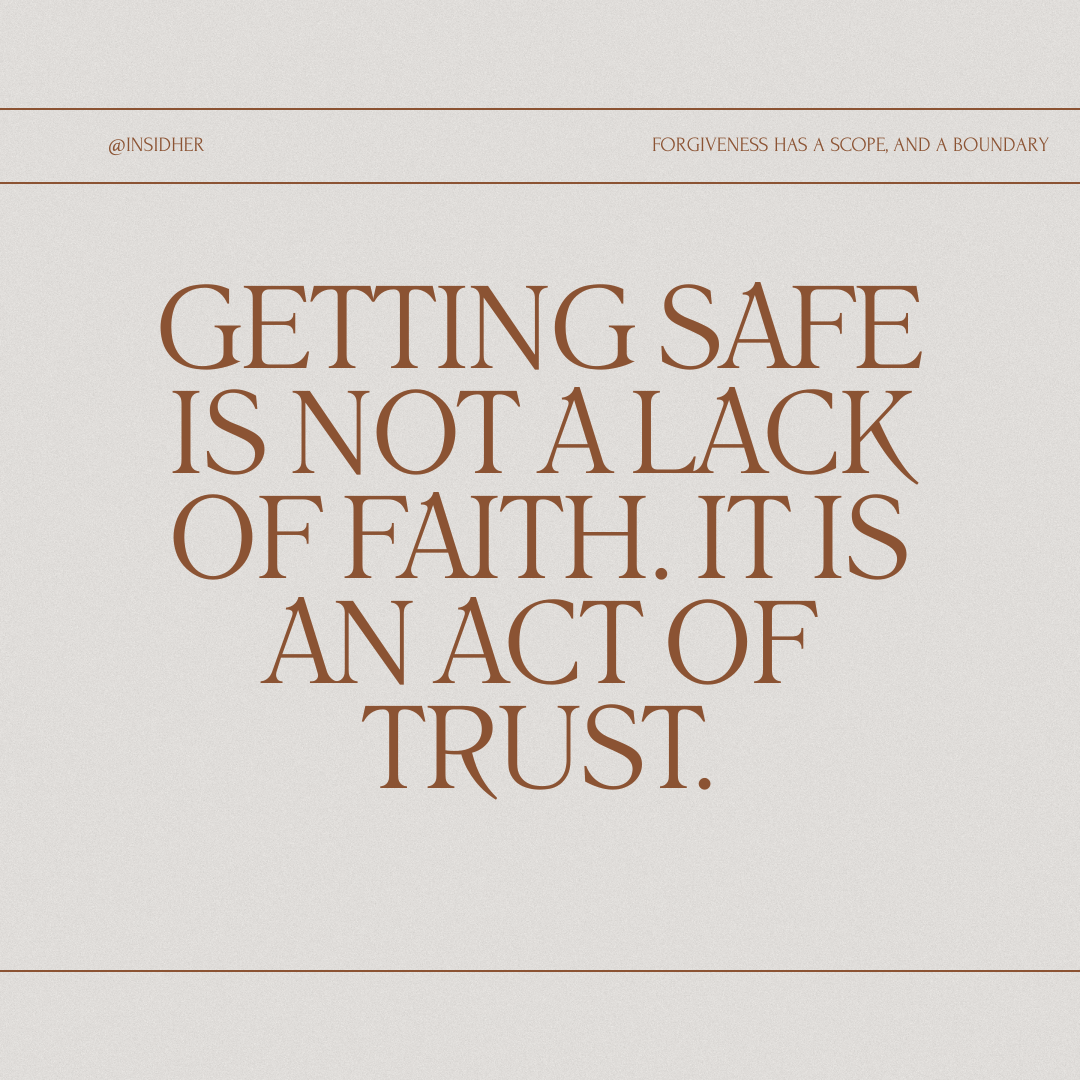
And getting safe, truly safe, matters deeply to God. Not because He cannot use you in the middle of hard seasons — He absolutely can and He does. His strength is made perfect in our weakness and He meets us in every chapter of our story. But your safety matters to Him. Your life matters to Him. And when you are out of survival mode, when the immediate threat has been addressed, there is a freedom and a capacity to heal that God can work with even more deeply. Getting safe is not a lack of faith. It is an act of trust that says, “God, I believe You have more for me than this.”
Heal throughout the process. Let forgiveness be part of the journey from the very beginning — not as a destination you reach after everything is resolved, but as something God walks with you through every step of the way. But do not let anyone, including a blog post, convince you that forgiving means accepting harm without recourse.
It does not. And God never intended it to.
Forgiving Yourself — Seeing Yourself As Human
Before I close this post I want to speak to something that doesn't get enough attention in conversations about forgiveness.
Forgiving yourself.
For me, self-forgiveness meant coming to terms with the ways I had shaped myself around survival. I was a good student. I didn't go out. I didn't do what other kids did. I made myself small and compliant and overachieving, not because that was who I was, but because I was trying to keep the peace. Trying not to give anyone another reason to hurt me or the people I loved.

And for a long time I carried guilt about the ways I had chosen connection over wisdom. The times I stayed in friendships or dynamics that weren't healthy because I wanted so badly to be loved and chosen. The times I silenced my own instincts to be likable.
Forgiving myself meant recognizing that I didn't know better before I knew better. That I was human. That even surrounded by wisdom I was going to get some things wrong — and that was not a character flaw. That was just being alive.
It also meant starting to see myself as someone worth protecting. Worth being honest about. Worth choosing.
I started taking it slower when inviting people into my life. I started trusting my own instincts when something didn't feel right instead of overriding them to keep the peace. I started allowing myself to take up space.
And I made a distinction that has changed how I move through every relationship I have:
I am not a nice person. I am a kind one.
Nice requires me to lie to keep the peace. Nice swallows the truth to make someone else comfortable. Nice silences itself so no one is inconvenienced by honesty.
Kindness is different. Kindness considers others and myself with honesty and transparency. Kindness can say a hard thing with a soft heart. Kindness tells the truth because it respects both people enough to do so.
I chose kind. And it has made all the difference.
What I Want You To Carry From This
Forgiveness is wide. It covers everyone, everything, everywhere, every time the pain comes back around. That is what Scripture calls us to and it is not a small thing.
Though, forgiveness is not the same as access. It is not the same as trust. It is not the same as staying. And it is not the same as silence in the face of injustice.
You can forgive someone and still shake the dust off your feet. You can release your resentment and still protect your peace. You can pursue justice and still pursue healing — at the same time, in the same breath, with God walking alongside both.
You can choose kind over nice and still be a person of deep and genuine grace.
And if you have ever been handed a version of Christianity that told you otherwise — that your pain was less important than someone else's comfort, that staying in harm was faithfulness, that speaking up was disrespect, that justice and forgiveness cannot coexist — I want you to know that was not the full picture of God's Word.
God's Word holds you too. Your safety matters to Him. Your healing matters to Him. Your justice matters to Him. And He never asks you to sacrifice any of those things in the name of forgiveness.
He asks you to forgive. And then He walks with you through every single thing that comes after.
Until next time, Abi 🤎
This is Part 3 of the Forgiveness Series. Part 4 — the final and most personal post — is coming soon. We'll talk about why none of this is truly possible without God and what happens when you finally ask Him to help you see what He sees.
If you or someone you know needs support, please reach out:
National Domestic Violence Hotline — Call 1-800-799-SAFE (7233) | Text START to 88788 | thehotline.org
RAINN National Sexual Assault Hotline — Call 1-800-656-HOPE (4673) | online.rainn.org
Love is Respect — Call 1-866-331-9474 | Text LOVEIS to 22522 | loveisrespect.org
StrongHearts Native Helpline — Call or Text 1-844-762-8483 | strongheartshelpline.org
If you are in immediate danger, please call 911.
Getting safe is not a lack of faith. It is wisdom. And you deserve both. 🤍